
"dry climate coffee"
8000 article(s) found

Sour, sweet and mellow Guatemala Antigua Coffee Bean Flavor description method
Of the three major non-volcanic coffee producing areas in Guatemala, the Mini Tenango Highlands has the driest climate and the highest elevation. The dry and hot wind from Mexico's Tehuantepec plateau protects the region's coffee from frost and can be grown to 2000 meters (6500 feet). Because of its remote location, all coffee farmers have to process their own coffee, but fortunately it is a stream in the area.

Delicious Guatemala Antigua Floral Coffee Flavor Description Variety Origin Grind Introduction
Guatemala is located in the tropics. The northern and eastern coastal plains have a tropical rain forest climate, while the southern mountains have a subtropical climate. There are two dry and wet seasons in a year. May to October is the wet season, and November to April of the following year is the dry season. Guatemala has a tropical climate on the narrow, fertile plains of the Pacific Ocean. The central plateau is also the cultural center of Guatemala, where year-round temperatures range from 1300 to 1800 meters

Manning Coffee, which is called a gentleman, has the flavor characteristics and its characteristic treatment-planing wet method.
Mantenin is a high-quality coffee bean growing in the plateau and mountain area of 750-1500 meters above sea level. It is a rare Arabica species in Indonesia, which mainly produces Robusta. Because of various environmental factors such as altitude and climate, the coffee beans planted are rich in aroma, rich in taste and strong in taste, with some slightly chocolate and syrup flavor. It is because it is full of mellow and rich and lively.

Introduction to the flavor and taste of coffee from Incht Manor, Guatemala, with a very strong flavor.
Rich volcanic soil, low humidity, plenty of sunshine and cool nights are the climatic characteristics of Antigua coffee producing areas. The valley is surrounded by three volcanoes: Agua, Fuego and Acatenango. Tierra del Fuego volcano is one of the three most active volcanoes in Guatemala, and the ash from frequent eruptions makes Antigua.

Sun treatment of Primary processing of Fine Coffee beans
Tanning is a traditional method for the initial processing of coffee beans, and at present, almost all coffee-growing countries such as Ethiopia and Yemen still use solarization to treat raw beans. Sun treatment will first identify sunken beans in the sink, that is, ripe or half-ripe beans are spread in the drying farm for natural drying. The specific time depends on the local climatic conditions, which usually takes two to four weeks.

A brief introduction to the description of the flavor and aroma characteristics of Columbia's exquisite coffee beans with high balance.
No matter in terms of yield or texture, Colombian coffee is first produced by Medellin, which is characterized by full granules, rich nutrition, moderate acidity, good balance, rich aroma and soft taste. In addition to Medellin, the provincial capitals of two neighboring provinces in the south, Armenia and Manizales, are also famous coffee producers.

Mocha matari is produced in the northern part of Yemen and has a strong sour taste.
Although Yemen is located in the Middle East with the Arabian Peninsula, it can actually be said that it is almost closely connected to the African continent located opposite the Red Sea. This geographical contiguity is also illustrated by the way Ethiopian coffee travels through Yemen. Ethiopian coffee processed naturally is still known as mocha. As for coffee exports, due to the complexity of the circulation process,

Introduction of Marguerite Coffee Manor in Antigua, the most famous coffee producing area in Guatemala
For the exchange of professional baristas, please follow the Coffee Workshop (Wechat official account cafe_style) the Antigua Valley of Guatemala has long been the most famous coffee producing area in Guatemala. The microclimate of the Antigua Valley is known all over the world for providing excellent conditions for growing coffee. The road to fame of this producing area began decades ago when it was discovered by some Japanese coffee traders.

Guatemala coffee estate with good acidity
Guatemala is located in the tropics. The northern and eastern coastal plain areas belong to tropical rain forest climate, while the southern mountainous areas belong to subtropical climate. There are two dry and wet seasons in a year. The wet season is from May to October, and the dry season is from November to April of the following year. Guatemala has a tropical climate on the narrow, fertile plains of the Pacific Ocean. The central plateau is also the cultural center of Guatemala, where year-round temperatures range from 1300 to 1800 meters

Characteristics of quality, taste and flavor description of half-sun red bourbon El Salvador Himalayan coffee
The coffee fields of El Salvador Himalayan coffee beans are endless and are mostly harvested mechanically in order to achieve economic benefits. When 75% of the coffee fruit in the coffee garden turns red, mechanical harvesting is started, followed by the same pre-washing operation, which is moved into the sink to remove floating beans, sift out the sunken beans, and then use a large pulp screening machine to dig out the pulp and remove the pods covered with pectin. The next stage is related to

Cultivation of water-washed bourbon boutique coffee beans at Musuyi treatment plant, Rwanda, geographical location, climate, altitude
For the exchange of professional baristas, please follow the coffee workshop (Wechat official account cafe_style) We have also introduced boutiques from the Nyamasheke region of Luanda several times, this time the selected Mushonyi is from Rutsiro, north of Nyamasheke, also on the banks of Lake Kiev. High altitude, fertile volcanic soil, and excellent climate

A brief introduction to the description of the flavor and flavor characteristics of Columbia's exquisite coffee beans with a long aftertaste
Origin: na Linglong altitude: 1860 m-2220 m processing: washing harvest time: April-June (75%), October-February (25%) varieties: new Kaddura species, Castie baking degree: CITY+ flavor characteristics: roasted almonds, lemon and orange, white chocolate, honey, peach, round body, long aftertaste, balance this is the reason for the excellent quality of Colombian coffee.

Introduction of Guatemala Coffee Manor LaTisha Manor Guatemala Cloud Manor
Located in the tropics, there are many volcanoes in the territory, the northern and eastern coastal plains have a tropical rain forest climate, and the southern mountains have a subtropical climate. The year is divided into two dry and wet seasons, with the wet season from May to October and the dry season from November to April of the following year. The annual precipitation is 2000-3000 mm in the northeast and 500-1000 mm in the south. Forests account for half of the country's area and are the best latitude for coffee production.

Introduction to the varieties of grinding scale of sun-dried coffee beans in Hope Manor, Colombia
The National Coffee Management Association of Colombia, like the National Management Association of Kenya, is a model of coffee organization. Compared with other producing countries, Colombia is more concerned with developing products and promoting production. It is this, coupled with its superior geographical and climatic conditions, that makes Colombian coffee excellent in quality and delicious and famous all over the world. The status of coffee in Colombia comes from the following examples

What are the flavor characteristics of sun-dried beans in San Jose Manor in Antigua, Guatemala? Taste characteristics
Professional coffee knowledge exchange more coffee bean information please follow the coffee workshop (Wechat official account cafe_style) what are the flavor characteristics of sun-dried beans in San Jose Manor in Antigua, Guatemala? Taste characteristics? Origin: Antigua San Jose Manor, Guatemala: 1700-1900 m above sea level varieties: bourbon treatment: black cherry sun flavor: blueberry sweet,

A brief introduction to the cultivation of Panamanian Flower Butterfly Fine Coffee beans, Geographic location, Climate and altitude
Panama is a small country located in the center of the American continent. The waters of the Atlantic and Pacific oceans flood its beaches. Panama is located at 9 degrees north latitude, the meeting point of the Central Mountains, where Mount Baru, one of the highest volcanoes in Central America, is located. Baru volcano has an altitude of more than 11400 feet, and the land around it is rich in nutritious and fertile soil, which is unique to Panama.

A brief introduction to the treatment method of grinding degree and baking degree of Columbia exquisite coffee beans with a long aftertaste
No matter in terms of yield or texture, Colombian coffee is first produced by Medellin, which is characterized by full granules, rich nutrition, moderate acidity, good balance, rich aroma and soft taste. In addition to Medellin, the provincial capitals of two neighboring provinces in the south, Armenia and Manizales, are also famous coffee producers.
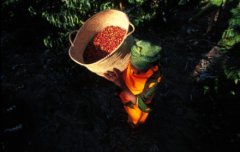
The method of taking beans from the processing of Coffee beans
Tanning is a traditional method for the initial processing of coffee beans, and at present, almost all coffee-growing countries such as Ethiopia and Yemen still use solarization to treat raw beans. Sun treatment will first identify sunken beans in the sink, that is, ripe or half-ripe beans are spread in the drying farm for natural drying. The specific time depends on the local climatic conditions, which usually takes two to four weeks.

Panamanian Coffee Farms
Pay attention to the coffee comment (Weixin Official Accounts vdailycom ) and find that the beautiful cafe opens its own small shop. The marine climate is a huge system covering the whole hemisphere. Some Caribbean currents originate as far away as Iceland, while some Pacific east-west currents originate half a world away off the coasts of Japan and Indonesia. In Panama, this is less than 100 kilometers wide.
The method of taking beans in the sun for the first processing
Tanning is a traditional method for the initial processing of coffee beans, and at present, almost all coffee-growing countries such as Ethiopia and Yemen still use solarization to treat raw beans. Sun treatment will first identify sunken beans in the sink, that is, ripe or half-ripe beans are spread in the drying farm for natural drying. The specific time depends on the local climatic conditions, which usually takes two to four weeks.